

Article by Gioia Salvatori
Citizens increasingly stay away from the ballot box. They spend their free time on the sofa, phones in their hand. They no longer read newspapers or books, and struggle to grasp complex issues, according to statistics and research .The collective image of the disengaged citizens is a merciless one: their brain supposedly numbed by social media, without any possibility of redemption and increasingly resembling a modern-day Big Lebowski. But isn’t this an all-too-convenient stereotype? Here are a few examples of what happens when institutions give ordinary people the chance to climb out of that “black hole” and make their voices heard.
In 2021, for the first time in Paris, randomly selected residents took their seats in a new citizens’ assembly to have a say in municipal affairs. What can they actually do? Debate proposals, adopt recommendations and submit formal proposals to the Paris City Council, which retains the power to approve or reject them. Parisians appear to have developed a taste for the practice: in 2025, the third cohort of the Assemblée citoyenne proposed extending the model across the arrondissements and secured political approval. Individual arrondissements can now establish their own citizens’ assemblies, if they want to.
In neighbouring Belgium, citizen participation has taken an even more structured form. The system is called Bürgerdialog, also known as the “Ostbelgien Model”. In Belgium’s German-speaking Community (Deutschsprachige Gemeinschaft Belgiens), a permanent Citizens’ Council (Bürgerrat), made up of randomly selected residents, organises the process and monitors the follow-up to recommendations also coordinating temporary citizens’ assemblies (Bürgerversammlungen). In March 2022, citizens who had taken part in an assembly on care services returned to the Parliament of the German-speaking Community, in Eupen. Alongside parliamentary committee members and government representatives, they examined what had happened to 14 recommendations about the health system. Some proposals were taken forward, others were not: elected representatives still have the final say.
In Ireland, citizens’ assemblies are not permanent institutions: they are convened to address specific issues and then disband. Yet the Irish model has attracted international attention, particularly since 2017, when a citizens’ assembly helped amend the country’s restrictive abortion law. Its recommendations played an important role in the parliamentary process that led to the 2018 referendum, in which voters approved the repeal of the Eighth Amendment to the Constitution. And afterwards? The citizens went home.
From experimentation to institutionalisation: why now?
For Antoine Vergne, co-director of Missions Publiques, and initiator and coordinator of the European project ScaleDem which explores four dimensions of scaling up democratic innovations, the time may be ripe for change. “In 2012 Missions Publiques proposed a national citizens’ assembly on energy in France, but even we, the people behind the idea, were not entirely convinced it would work. There has been a huge acceleration over the past five or six years. And yet, I think we’re still only halfway there”, Vergne says.
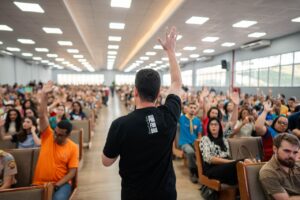
Could today’s political climate, with democracy seemingly under threat even in Western countries, provide fertile ground for greater citizen participation? “Political and cultural systems resist change until the very last moment. Then a tipping point can occur. Brexit, for example, came as something of a shock to the European institutions, which subsequently began taking democratic innovations more seriously. Change can happen, and not necessarily for the worse”, Vergne underlines.
But change requires resources and people. Vergne argues that 1% of national or European budgets should be allocated to democratic innovation. Equally important is the human factor: people who experience a successful participatory process can become its strongest advocates, encouraging others to get involved and setting off a virtuous circle.
Vergne points to Nantes, where citizen participation has become embedded in local government practices over the past 25 years, with a continuous offering of various participation formats which bring residents together around major issues affecting their city.
Another example comes from Stuttgart, in Germany, where the felling of century-old trees as part of a controversial railway project, sparked public outrage. In 2011, the Greens came to power in Baden-Württemberg for the first time, in coalition with the Social Democrats, and subsequently developed a policy of public engagement, backed by legislation, funding and practical support for municipalities.
Once again, the supposedly hopeless Citizen X has risen from the sofa, shed the Big Lebowski dressing gown and made their voice heard, proving perfectly capable of understanding complex issues, participating in public debate and taking action.
“It would certainly be desirable for this historical moment to become an opportunity to institutionalise new forms of participation. Otherwise, in a climate of profound economic and geopolitical uncertainty, we risk seeing citizens’ anger and frustration prevail”, says participatory democracy activist Marco Cappato, president of Eumans, and treasurer of the Luca Coscioni Association.
Channelling this discontent into constructive forms of dialogue and participation could not only help prevent social tensions and conflicts, “but also foster a culture of informed debate, helping citizens and institutions tackle even the most complex decisions”, Cappato says. The benefits are twofold: “bringing people closer to politics, helping them break out of the social media bubbles that fuel polarisation and confrontation, and helping policymakers make decisions when they reach a deadlock.”
Social media is another major concern in the debate about democracy. Dorota Stasiak, from the Research Institute for Sustainability at GFZ and head of ScaleDem’s Translation Hub, takes the discussion a step further by drawing attention to the consequences of polarizing online environments for younger generations, a phenomenon explored in Jonathan Haidt’s book The Anxious Generation (Penguin Press, 2024). “Social media platforms prioritize playing with our emotions, stressing differences and looking for sensation. This is challenging for democracies, and generally for the mental health of our populations,” she explains.
Yet, even when people have been drawn out of their isolation, their trust earned and their participation secured through effective practices, the first and most difficult steps, one crucial question remains: “What kind of process do we create once participation has taken place? And how do we connect it to the rest of the political system?”
From research to practice: the Translation Hub
At the heart of ScaleDem, the Translation Hub is not simply about transferring research findings to policymakers or turning academic theory into practice. It is about translating different languages and forms of knowledge, creating the conditions for researchers, policymakers and practitioners to learn from one another and find workable solutions. Its ambition is to move beyond linear knowledge transfer and become a genuine collaboration infrastructure.

The Translation Hub is not simply another good practice. Its role is to organise encounters that can produce tangible results. A real challenge, compounded by other obstacles. Stasiak recalls having observed in numerous well-organised deliberative processes, with excellent facilitation and a remarkable ability to bring different people into dialogue, which nevertheless failed to have a significant impact on political decisions.
Why? Do political institutions close ranks to preserve the status quo when faced with democratic innovations? Is it ultimately a question of power?
“If we understand politics as a zero-sum game, then introducing new practices might be a threat. Because they might come at the cost of something that is existing. And here our path dependency thinking and our customs and ways of doing things so far come into conflict with something new – Stasiak says – But in most cases, democratic innovations are understood as an addition to the existing ecology of participation.” Yet there are other obstacles inherent in participatory practices themselves. First, democratic innovations are highly context-dependent. A citizens’ assembly, participatory budgeting process or co-governance initiative cannot simply be transplanted from one place to another. Second, even when there is political commitment to an innovation, institutions may absorb something new into familiar procedures. Formal adoption does not necessarily mean that practices have genuinely changed. Third, democratic innovation is inherently political: it can affect who gets a voice, whose knowledge counts and how influence is distributed. Policymakers are therefore not neutral recipients of evidence, Stasiak explains. “The obstacle is not simply getting the right information into the right hands – she adds – It is about relevance, relationships, institutional capacity, established practices and, ultimately, power.”
Whitin the Translation Hub, several initiatives such as reflection workshop, “bitter-sweet lessons” to openly approach difficulties, and the “resonance space” to bring together different perspectives, aim to foster genuine mutual understanding.
Moreover, in late October 2026, ScaleDem launched its Piloting and Twinning Programmes, designed to support 13 initiatives, including financially, in scaling up their democratic innovation projects or learning from others that have already developed similar initiatives. Around 30 organisations are involved.
All this takes place face to face, without shying away from challenges. All this is also about human relationships and empathy: it is human, all too human. Just like our Big Lebowski, stretched out on the sofa with his White Russian. There are no shortcuts to earning his trust: it takes time, patience, staring him in the eyes and a real opportunity to have his voice heard. But if these efforts finally convince him to get off the sofa, he might just surprise us all.
—-
Photos by:
Caleb Oquendo from Pexels
Eumatheus Amaral from Pexels
Antenna on Unsplash