

At the 2025 Rencontres Européennes de la Participation held in Strasbourg on March 17-19, the ScaleDem project hosted an interactive workshop focused on scaling democratic innovations. The session convened a diverse group of researchers, practitioners, and public participation experts to explore how participatory practices can be expanded and institutionalized without compromising their integrity or effectiveness.
The workshop featured contributions from ScaleDem’s partners Stefano Camatarri (Catholic University of Louvain & Catholic University of Lille), Jacob Birkenhäger (NEXUS), Jehan Bottin (Catholic University of Louvain), Pieter Velghe (Catholic University of Louvain) and project coordinator, Camille Dobler (Missions Publiques)
Presenters introduced ScaleDem’s analytical framework for understanding and guiding the scaling of democratic innovations, organized around four key dimensions:
- Scaling out: expanding the innovation across new locations or levels of governance
- Scaling in: strengthening the quality and coherence of the innovation as it grows
- Scaling high: embedding the innovation within formal institutions and decision-making structures
- Scaling deep: rooting the innovation in societal norms and everyday civic culture
Rather than promoting one-size-fits-all replication, the ScaleDem’s framework emphasizes context-sensitive strategies and the importance of adapting innovations to new settings while maintaining their core principles.
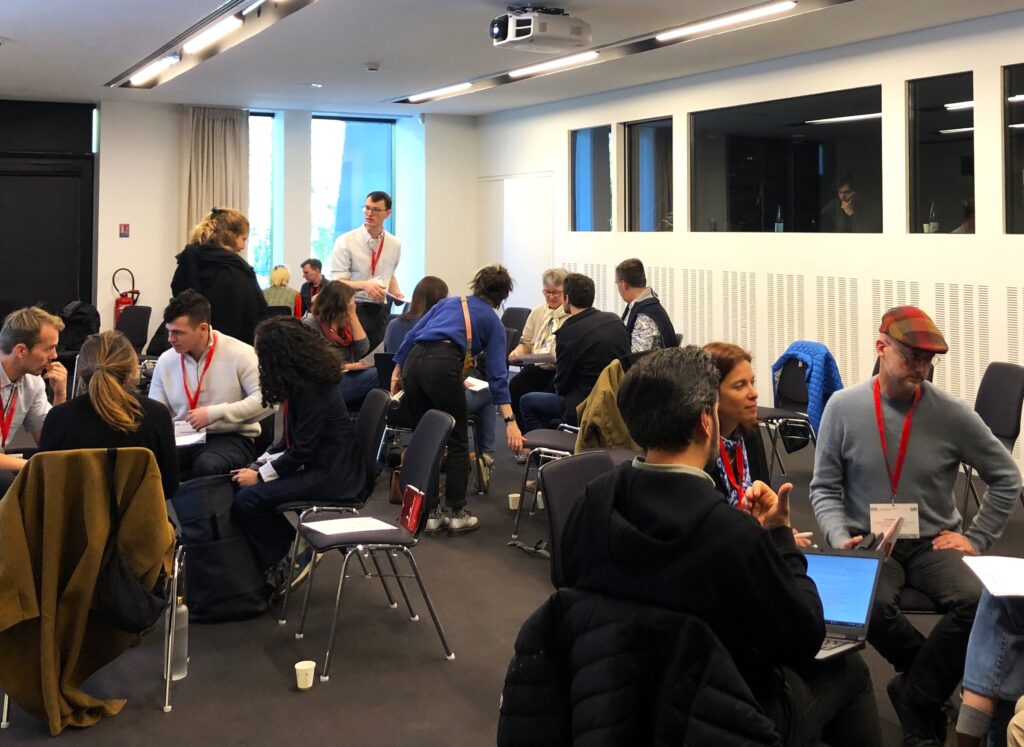
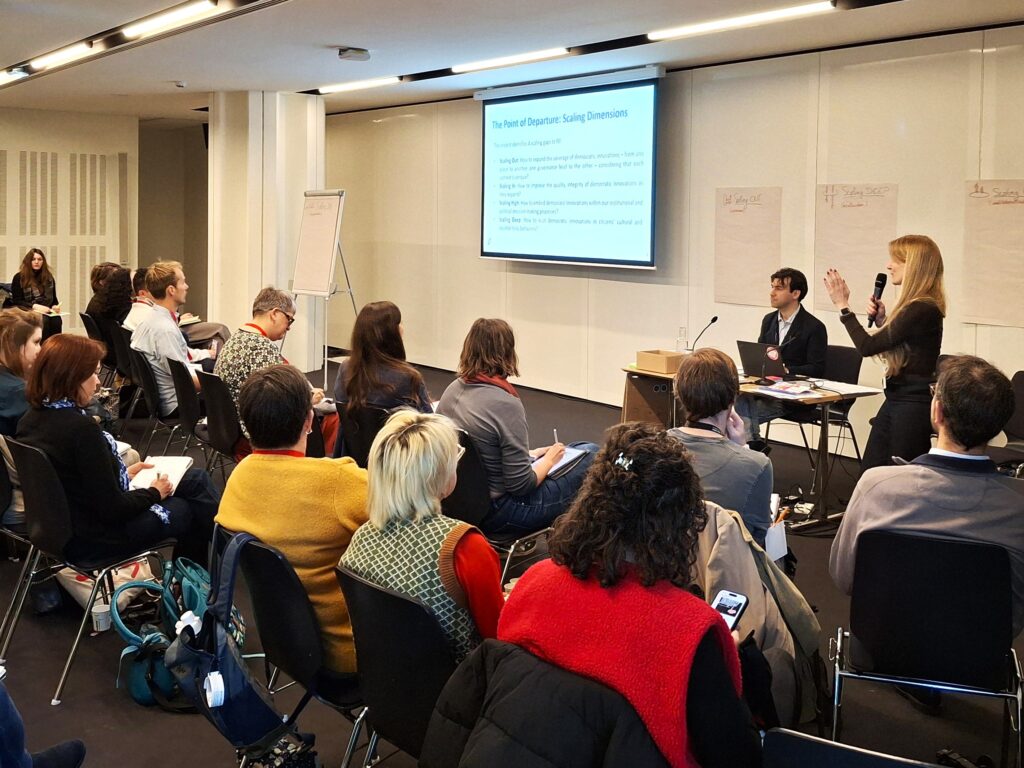
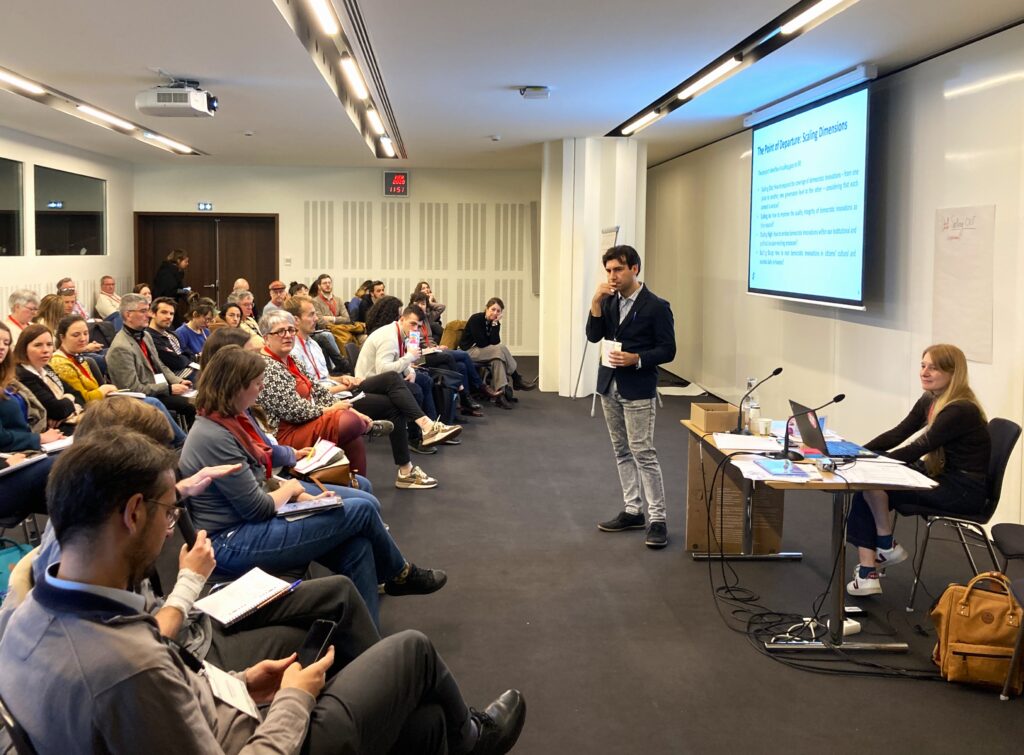
Participants engaged in a group exercise applying this framework to three widely used participatory mechanisms: participatory budgeting, deliberative mini-publics, and local referenda. Drawing from real-life examples, each group identified potential challenges to scaling and explored the conditions needed to support successful implementation in other contexts.
The session concluded with a plenary discussion, where participants shared key takeaways and reflected on the importance of political will, institutional support, and civic engagement in scaling participatory practices.
One consistent message emerged from the discussions: while democratic innovations hold strong potential, scaling them effectively requires strategic adaptation, collaboration, and a clear understanding of the local environment.
Get more insights into our projects! And to explore the outcomes in detail, download the full workshop report here.